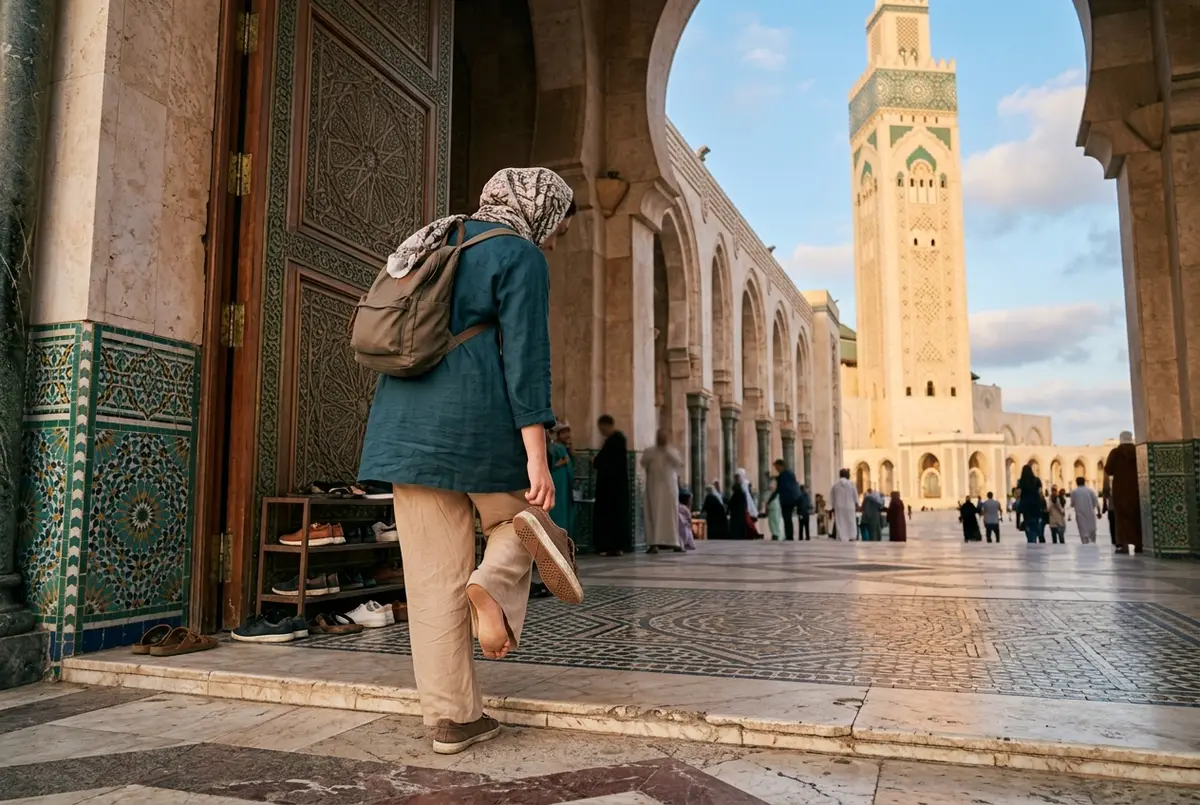
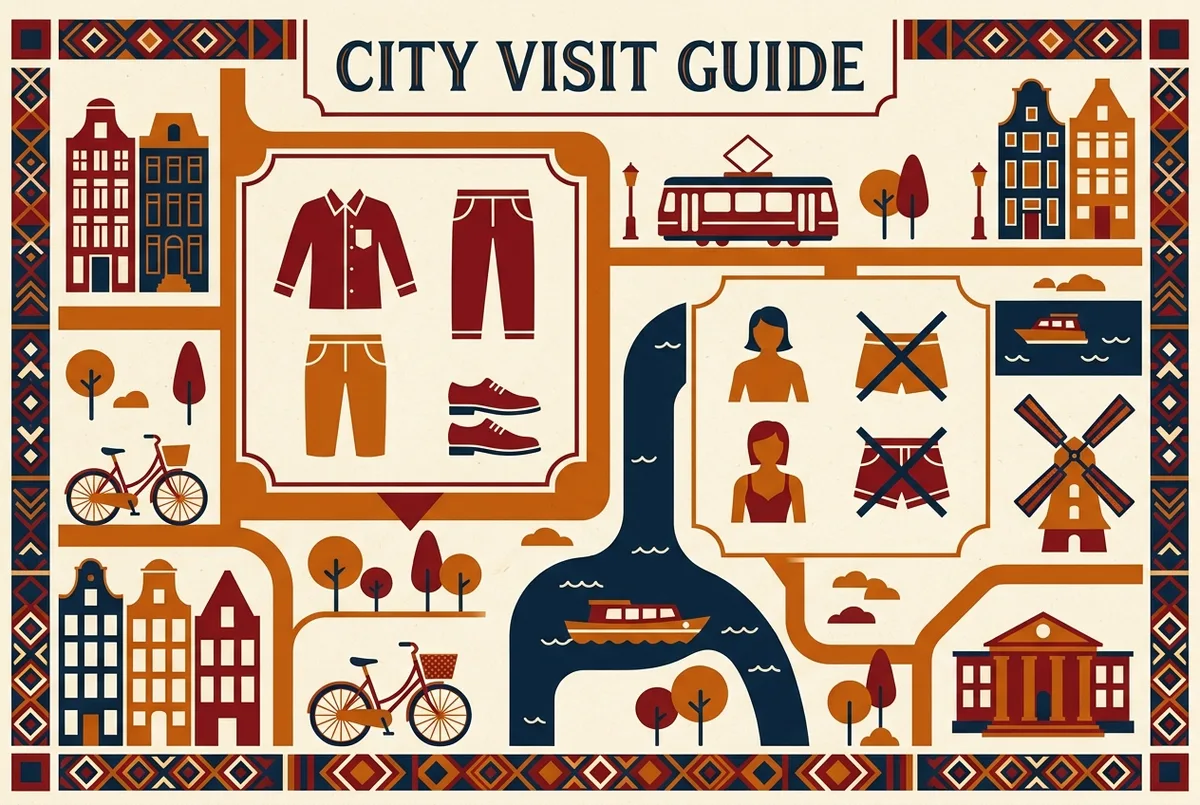
The Hassan II Mosque dress code requires shoulders and knees covered for everyone, with shoes removed before entering the prayer hall, and women should carry a scarf in case one is requested at the door.
The Hassan II mosque dress code is simple: cover your shoulders and knees, avoid tight or sheer fabric, and be ready to take your shoes off before stepping onto the prayer hall’s carpets. These rules apply to every visitor regardless of gender or religion, since the guided visit is a real working mosque, not a museum exhibit built for tourists.
This guide covers exactly what counts as acceptable hassan ii mosque attire, what happens with shoes and the hassan ii mosque ablution rooms during the tour, and the wider etiquette that keeps a visit respectful from the moment you arrive at the visitor entrance to the moment you leave the esplanade.
What Is the Hassan II Mosque Dress Code?
The dress code asks every visitor, men and women alike, to cover shoulders and knees and to avoid clothing that is sheer, tight, or cut low at the neckline. Loose, breathable fabric works best anyway given Casablanca’s warm coastal climate, so modest usually means comfortable here too.
Guides at the visitor entrance do turn away outfits that clearly fall outside these guidelines, so it is worth checking your planned outfit the night before rather than improvising at the door. There is no rented clothing available on site, so bringing the right layers yourself is the only reliable option.
What Should You Wear to Hassan II Mosque?
Wear long trousers or a skirt that covers the knees, and a top that covers the shoulders and does not sit too low at the neckline. A light cardigan, shawl, or long-sleeve shirt packed in your bag works well for layering over a sleeveless top if the weather is warm when you arrive.
Comfortable, slip-on shoes are worth choosing over lace-up boots, since everyone removes footwear before the prayer hall and you will want that step to be quick. Avoid clothing with large logos, offensive graphics, or anything overly casual like beachwear, since the guided visit moves through an active place of worship rather than a sightseeing stop.
What Should Men Wear to Hassan II Mosque?
Men should wear long trousers rather than shorts, and a t-shirt or shirt that covers the shoulders, avoiding sleeveless vests or anything with offensive graphics. A collared shirt is not required, but it tends to photograph well against the mosque’s marble and cedar backdrops if that matters to you.
Sandals are fine as long as they are easy to slip off before the prayer hall, though closed shoes with socks work just as well in cooler months. Men traveling straight from the beach or a pool day elsewhere in Casablanca should plan to change beforehand, since swimwear and beach cover-ups do not meet the modesty standard here.
Do Guides Enforce the Dress Code Strictly?
Yes, guides at the visitor entrance do check outfits before letting groups through, and they will ask you to adjust or cover up if something falls outside the modesty guidelines. This is not arbitrary gatekeeping, it protects the working mosque’s religious character for the community that still worships there daily.
Enforcement tends to be firm but polite, and most travelers who dress with the rules in mind beforehand pass through without any issue or delay. Guides have seen every kind of borderline outfit before, so a quick, respectful adjustment on the spot is common and nothing to feel embarrassed about.
What Happens If Your Outfit Does Not Meet the Dress Code?
If your outfit falls short, such as shorts above the knee or a sleeveless top, staff may offer a simple wrap or shawl to cover the gap, though supply is limited and not guaranteed at every visit. The safest approach is never relying on borrowed coverage and instead packing your own modest layers before you leave your hotel.
In rare cases where an outfit clearly cannot be adjusted on the spot, entry may be delayed until proper covering is arranged, which can mean missing your booked guided slot entirely. Since interior visits run on a fixed schedule tied to prayer times, there is no simple “wait for the next one in ten minutes” option, so getting dressed right the first time matters more here than at a typical museum.
What Should You Pack for a Comfortable Visit?
Beyond the clothing itself, pack a lightweight scarf, sunscreen for the exposed esplanade, and a bag small enough to carry your shoes comfortably if you prefer not to use the entrance shoe area. Water is worth carrying too, since Casablanca’s coastal sun can be intense even on a guided visit that only lasts an hour.
A copy of your booking confirmation and a passport or ID copy round out what most guides recommend bringing, since identification is sometimes requested at check-in alongside your ticket. A small tip for your guide in dirhams is appreciated, though never required, and having cash on hand avoids any awkward moment at the end of a visit you have otherwise planned down to the last detail.
Do Women Need to Cover Their Hair at Hassan II Mosque?
Women are not always required to cover their hair, but guides may ask for a headscarf at the entrance depending on the outfit worn, so packing a lightweight scarf is a smart precaution rather than a strict rule. Bringing one avoids any last-minute scramble or need to borrow one from a fellow visitor.
A simple scarf that can double as a shoulder cover if needed gives you flexibility without adding much to your daypack. Many travelers keep one folded in their bag for the entire Casablanca trip, since it is useful at other religious sites too.
Do You Need to Remove Your Shoes at Hassan II Mosque?
Yes, everyone removes their shoes before stepping onto the carpeted prayer hall, following the same custom observed by worshippers themselves. Shoes stay off from that point until you exit back onto the esplanade.
Bringing slip-on footwear rather than boots with laces makes this step faster for you and for the group moving through with you. Some visitors carry a small bag to hold their shoes during the guided portion, though staff typically manage a shoe area near the entrance to the hall.
What Happens at the Hassan II Mosque Ablution Rooms?
The guided tour includes a stop at the hassan ii mosque ablution rooms, where your guide explains wudu, the ritual washing Muslims perform before prayer. Visitors are not expected to perform the ritual themselves, only to observe respectfully while the guide describes its steps and meaning.
These rooms are architecturally striking in their own right, with detailed tilework and fountains that few visitors expect to see as part of a mosque tour. Photography is usually fine here, but keep voices low, since the space still carries religious significance beyond its visual appeal.
How Should You Behave During the Guided Tour?
Keep your voice low throughout the visit, avoid walking directly in front of anyone praying, and follow your guide’s lead on where photography is and is not appropriate. The prayer hall remains an active space for worship outside guided-visit hours, so the same respect expected in any working mosque applies here.
Physical affection beyond hand-holding is best avoided inside the complex, and it is worth silencing your phone before entering the prayer hall itself. Most visitors find these expectations easy to meet once a guide walks them through what to expect, which is exactly what the Hassan II Mosque tour experience guide covers in more detail.
Can You Take Photos Inside Hassan II Mosque?
Yes, photography is generally allowed inside the prayer hall and around the esplanade during the guided visit, though your guide may ask you to pause during specific moments or in certain rooms. Flash photography and tripods are best avoided out of respect for the space and for other visitors nearby.
Drone photography is not permitted around the mosque grounds without separate authorization, which is not something a standard guided ticket includes. For travelers hoping to capture the illuminated exterior after dark instead, see Hassan II Mosque at night for the best viewpoints.
Does Weather Affect What You Should Wear to Hassan II Mosque?
Casablanca’s coastal climate stays mild for much of the year, but summer afternoons can turn warm and humid, which is worth factoring into your outfit choice within the modesty rules. Lightweight linen or cotton in loose cuts covers shoulders and knees without trapping heat the way synthetic fabrics can.
Winter visits sometimes call for a light jacket or cardigan, both of which double as an easy shoulder cover if your top underneath is sleeveless. Either season, layering gives you flexibility to stay modest and comfortable without needing a completely different wardrobe just for the mosque.
Is There a Dress Code for Children Visiting Hassan II Mosque?
The same modest guidelines apply loosely to children, though enforcement is typically more relaxed than for adults, especially for very young kids. Covered shoulders and knees are still the safest default to avoid any awkward moment at the entrance.
Families planning a visit should also check the practical side of touring with little ones, covered fully in visiting Hassan II Mosque with kids, including stroller access and how the tour length suits shorter attention spans.
Can Non-Muslims Really Visit Hassan II Mosque?
Yes, and this is exactly what makes the dress code worth knowing in advance: Hassan II Mosque is one of the only mosques in Morocco that opens its prayer hall to non-Muslim visitors through the guided-tour system. The full explanation of how that access model works, and why it exists, lives in can non-Muslims visit Hassan II Mosque.
Understanding that this is a rare exception, not the norm across Moroccan mosques, helps explain why the etiquette expectations here matter more than at a typical tourist attraction.
Does the Dress Code Change During Ramadan?
The core dress code stays the same during Ramadan, though tour schedules and hours shift around the fasting month’s rhythm, and modesty expectations, if anything, are taken even more seriously by staff and fellow visitors. See Hassan II Mosque during Ramadan for exactly what changes about timing and access that time of year.
Travelers visiting during Ramadan should also expect a quieter esplanade during the day and a livelier one after sunset, as local life shifts around the breaking of the fast.
What Do First-Time Visitors Get Wrong About the Dress Code?
The most common mistake is assuming beachwear or resort casual clothing will pass, since Casablanca’s coastal setting leads some travelers to pack lighter than a religious site actually requires. Sleeveless tops, shorts above the knee, and sheer beach cover-ups are the outfits guides turn away most often at the entrance.
A second common mistake is leaving the scarf or shoulder cover in the hotel room “just in case,” only to need it once at the door. Since the mosque sits a taxi ride from most hotels, packing the right layers before you leave saves a return trip that would otherwise cost you your booked time slot.
A third mistake is underestimating how strictly the shoe removal rule is enforced. Some visitors expect to keep socks on and shoes in hand near the entrance rather than in a designated area, which can slow down a group moving through together. Following your guide’s lead here keeps the visit moving smoothly for everyone in your slot.
Is the Dress Code Different for the Hammam?
Yes, the hammam operates under its own set of customs separate from the mosque’s prayer hall, since bathing attire naturally differs from the modest street clothing required for the guided tour. Visitors using the hammam typically change into swimwear or a wrap provided or recommended on site, rather than following the shoulders-and-knees rule that applies to the mosque interior.
Because the hammam runs as a separate facility with its own access and pricing, plan your outfit changes around whichever order you tackle the two in. Most travelers visit the mosque first in modest clothing, then change for the hammam afterward, though the exact sequence is entirely up to you. See the Hassan II Mosque hammam guide for full etiquette on that side of the complex.
What About the Hammam at Hassan II Mosque?
The mosque complex includes a working hammam, Casablanca’s traditional public bathhouse, which operates separately from the guided mosque tour with its own access and pricing. Etiquette there follows different, more relaxed customs than the prayer hall itself. The full breakdown lives in the Hassan II Mosque hammam guide.
Combining both in one Casablanca day is popular among travelers who want the cultural depth of the mosque tour alongside a genuine local bathing experience.
Book Your Visit With Dress Questions Settled
Once you know exactly what to wear and what to expect at the door, the only step left is locking in your guided time slot. The Hassan II Mosque tickets homepage lists every current tour and ticket option in one comparison table, and Hassan II Mosque tickets covers current prices, hours, and booking methods in full. The Hassan II Mosque history guide is also worth a read beforehand if you want context on what your guide will be showing you.
Arriving already dressed appropriately means a smoother check-in and more time actually enjoying the hassan ii mosque attire-appropriate visit rather than adjusting layers at the entrance.
Frequently Asked Questions
What is the Hassan II Mosque dress code?
Cover your shoulders and knees, avoid tight or sheer fabric, and be ready to remove your shoes before the prayer hall. These rules apply to all visitors regardless of gender.
Do women need a headscarf to visit Hassan II Mosque?
Not always, but guides may request one depending on the outfit worn, so packing a lightweight scarf is a smart precaution.
What happens during the ablution room stop on the tour?
Your guide explains wudu, the ritual washing before prayer, while visitors observe respectfully without needing to perform the ritual themselves.
Can non-Muslims wear their own clothing style, or is something special required?
No special clothing is required beyond the standard modesty rules. Any outfit covering shoulders and knees in breathable fabric is acceptable.
Is the dress code stricter during Ramadan?
The core rules stay the same, though modesty expectations tend to be taken even more seriously by staff and fellow visitors during the fasting month.
Can I rent modest clothing at Hassan II Mosque if I forget mine?
No, there is no rental clothing available on site, so packing appropriate layers before you leave your hotel is the only reliable option. Staff may offer a simple wrap in limited cases, but it is never guaranteed.
Is the dress code the same for the hammam as for the mosque tour?
No, the hammam follows separate bathing customs and typically allows swimwear or a provided wrap, unlike the shoulders-and-knees rule required inside the mosque’s prayer hall.